


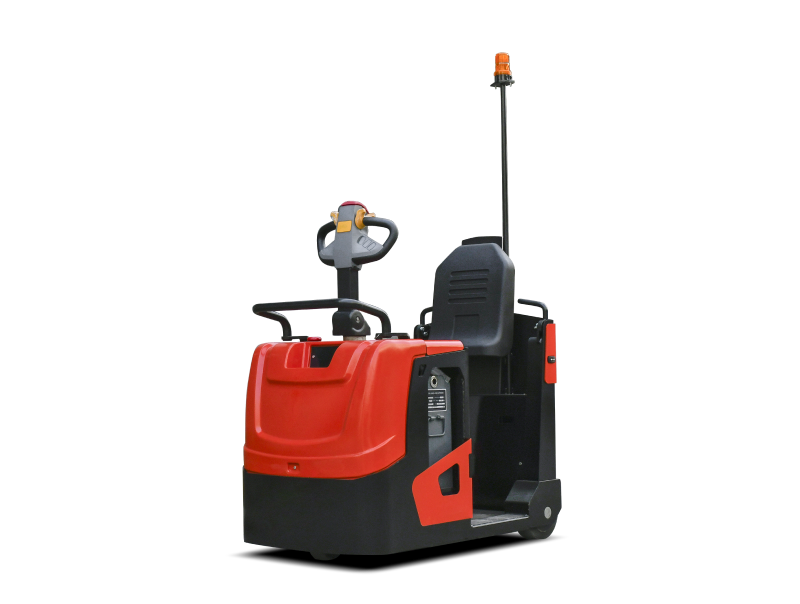
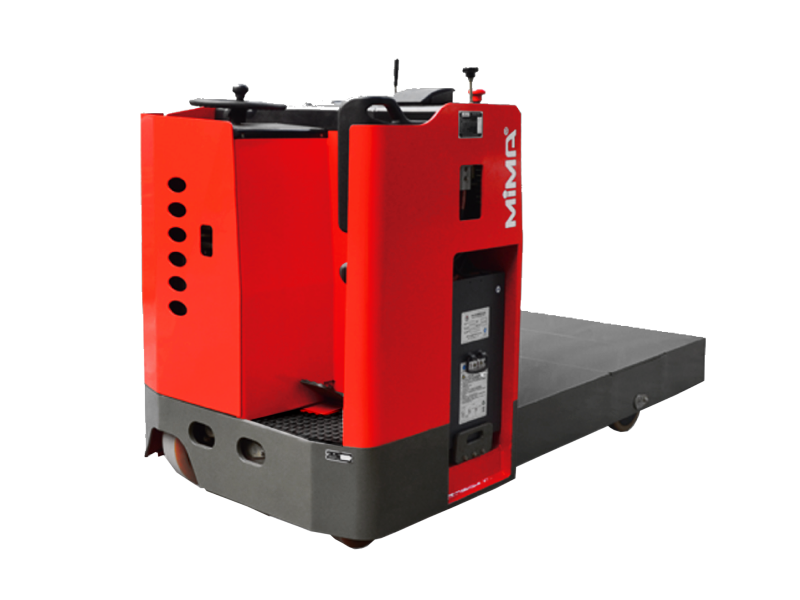
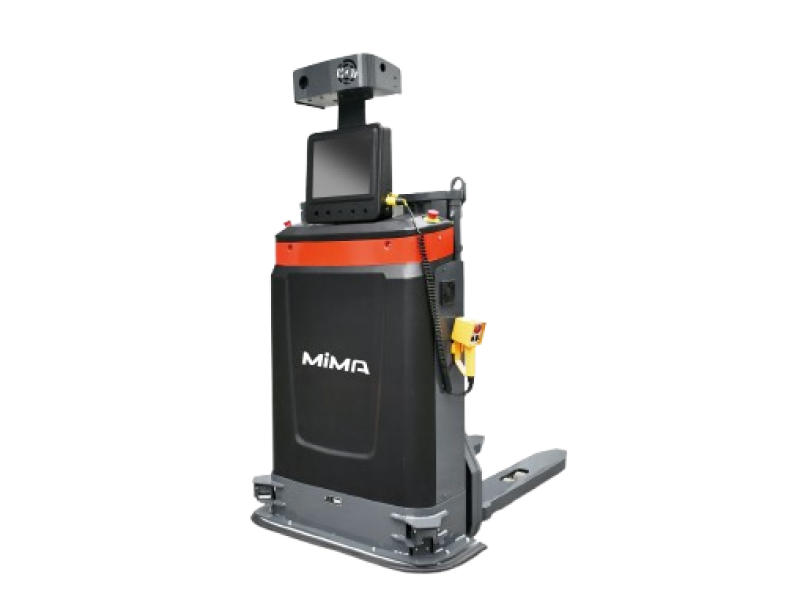



For long-load handling, rated capacity is only the starting point. A three-tonne truck may be suitable for a compact load at ground level, yet unsuitable for a six-metre steel profile stored at height.
Load length, load centre, lifting height, available space and operating conditions all affect the final selection. These factors should be clear before individual models are compared.
Why Long Loads Require a Different Selection Process
A conventional forklift normally needs enough space to turn with the load. As the load becomes longer, manoeuvring space increases significantly.
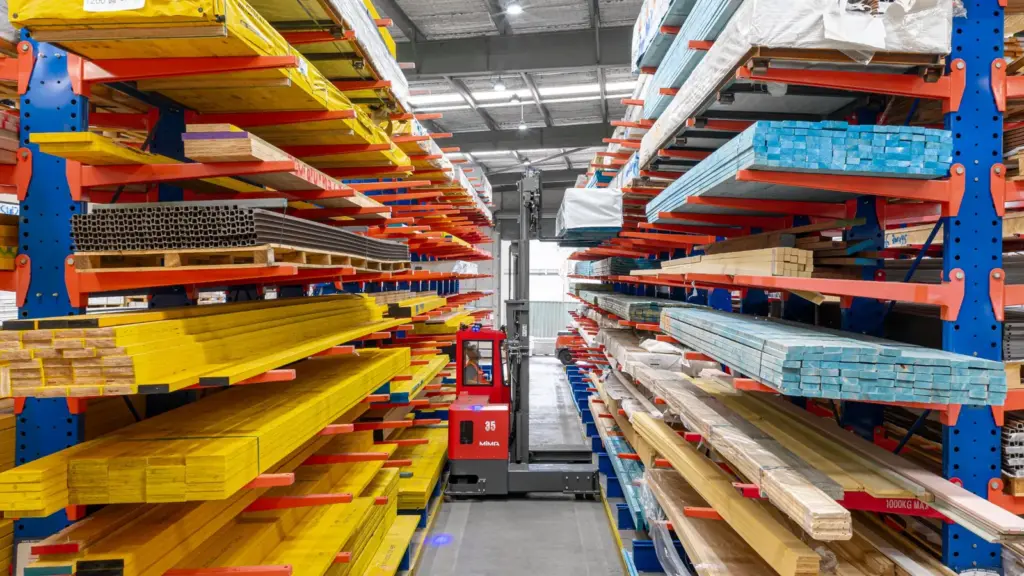
A multi-directional forklift can travel sideways while keeping the load parallel to the aisle, reducing unnecessary turning and making long-material handling possible in narrower warehouse areas.
However, sideways travel is only part of the solution. The truck must also provide suitable load support, residual capacity, stability and fork configuration.
The right truck is determined by the complete operating conditions—not by a single specification.
Four Factors That Determine the Right Truck
1. Load Characteristics
The load should be assessed by more than its total weight. Length, load centre, weight distribution, rigidity and support requirements all affect stability and fork configuration. A long or flexible load may require wider fork spacing or additional support, even when its weight is within the truck’s rated capacity. Selection should therefore be based on the most demanding load expected in operation.
2. Available Operating Space
Required aisle width is determined by the complete truck-and-load combination, not by the truck dimensions alone. Load length, rack depth, entry angle, end-of-aisle clearance and fixed obstacles all influence the space needed for transport and stacking. A more compact truck may reduce aisle requirements, but this must be balanced against capacity, stability and cycle efficiency.
3. Lifting Height and Residual Capacity
Rated capacity normally refers to specific load-centre and mast conditions. As lifting height or load centre increases, the available residual capacity may decrease. Fork dimensions, attachments and mast configuration can further affect the result. The truck must therefore be evaluated against the actual load at the highest required storage position, rather than against nominal capacity alone.
4. Operating Environment and Duty Cycle
Truck configuration should reflect both the working environment and the intensity of use. Indoor, outdoor and mixed operations may require different tyres, ground clearance, protection levels and chassis characteristics. Travel distance, shift length, handling frequency and charging conditions also influence battery selection, operator comfort and overall productivity. A truck suitable for occasional warehouse use may not be the best solution for continuous multi-shift operation.
Which MiMA Series Fits Your Application?
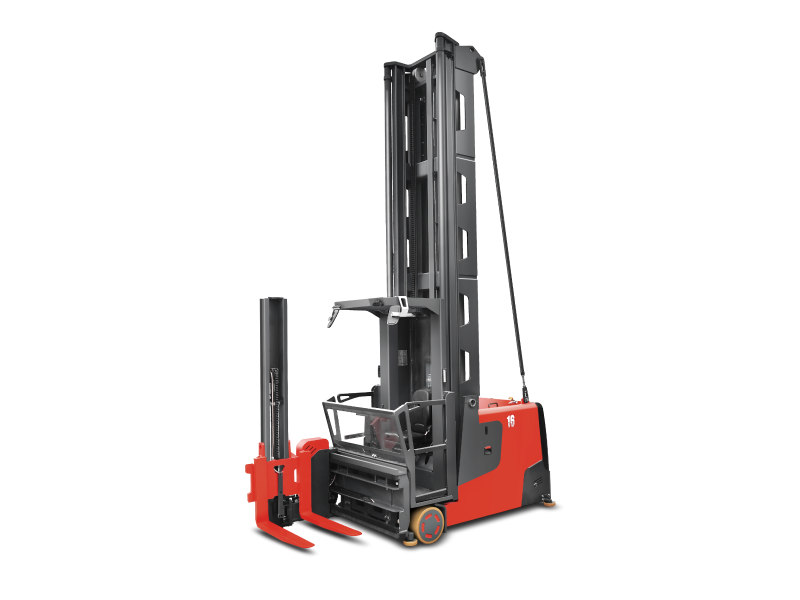
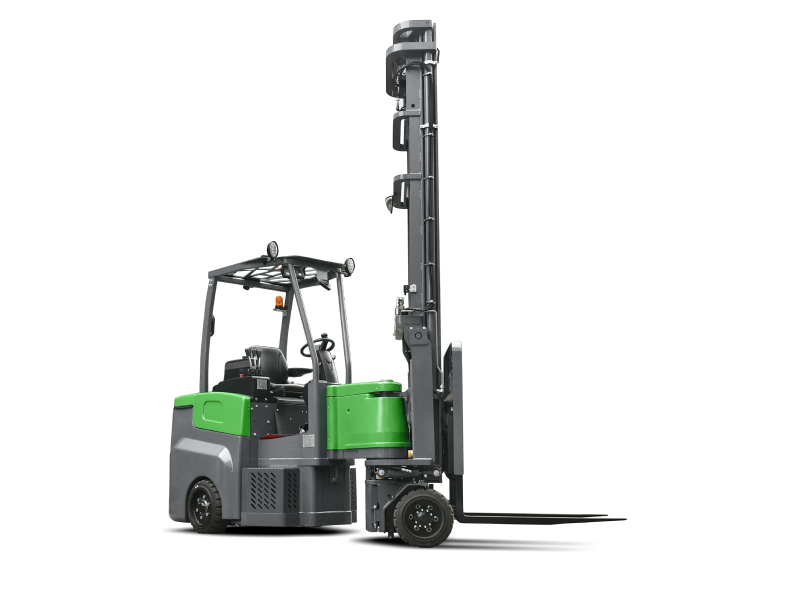
MiMA’s multi-directional forklift range covers different operational priorities, from heavy and customized loads to mixed indoor-outdoor operation, intensive warehouse handling and space-efficient storage.
MQC Series — Adaptable to Heavy and Complex Loads
MQC series is developed for demanding long-load applications involving heavier materials, large load dimensions or specialized handling requirements. Fork spacing, lifting height and attachments can be configured according to the load and operating conditions.
Its broad configuration flexibility makes it suitable for demanding projects involving oversized loads, specialized forks and application-specific modifications.
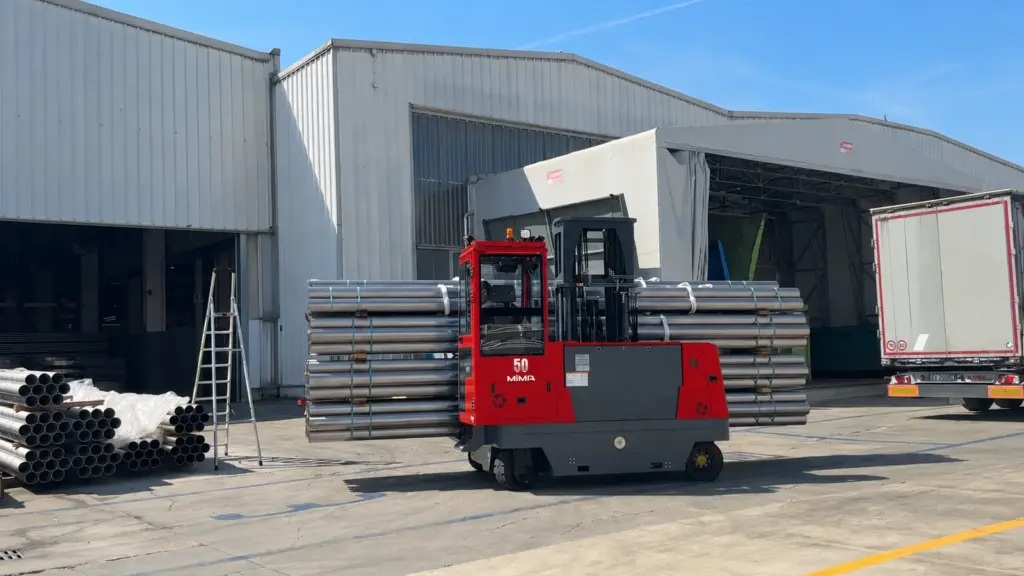
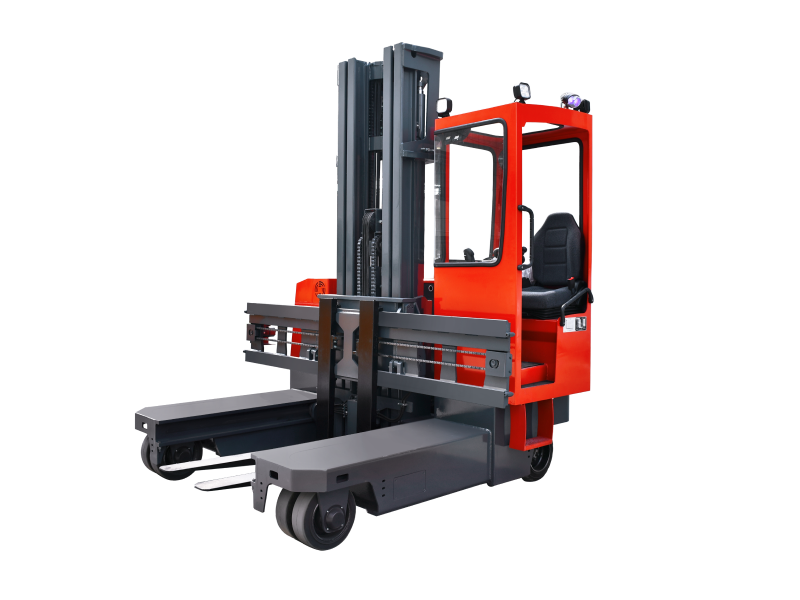
MQK Series — Greater Freedom Across Different Working Areas
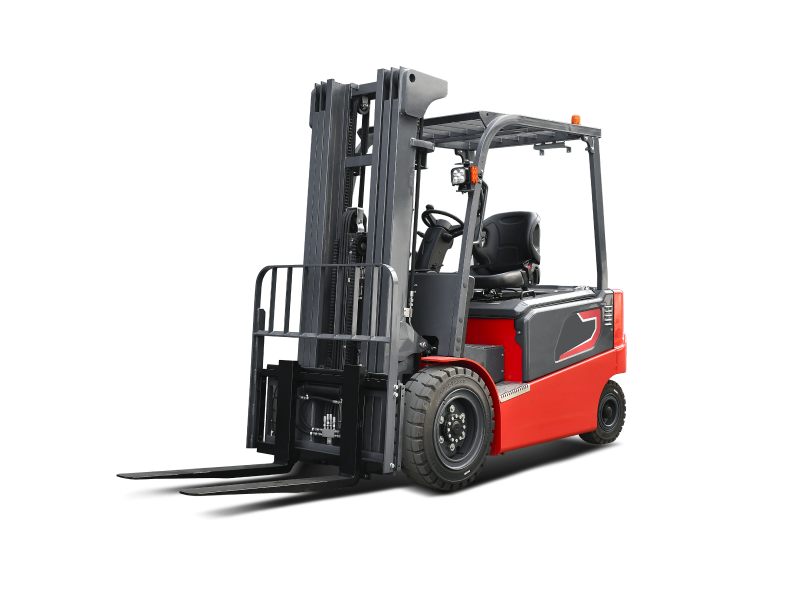
MQK series uses a counterbalanced structure without front support legs, allowing more flexible access to loads and operating positions.
This makes it particularly suitable for movement between warehouses, loading areas and outdoor yards. Depending on the configuration, it can also handle both long materials and palletized goods within the same operation.
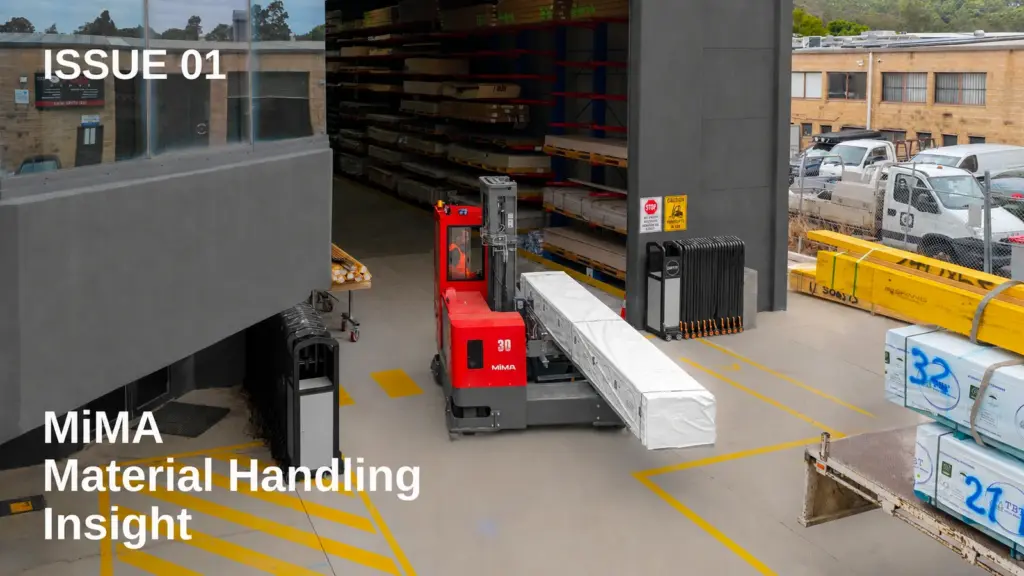
See how the MQK switches between travel directions while handling long materials.
MQZ Series — Higher Throughput with Seated Operation
Where long materials are moved repeatedly throughout the day, operating comfort and travel efficiency become more important.
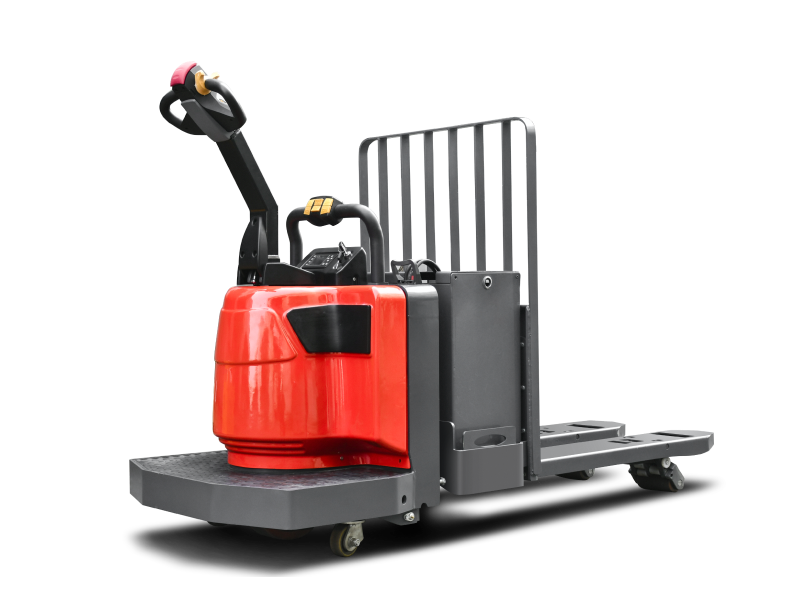
MQZ series combines multi-directional handling with a seated operating position, making it suitable for longer travel distances, frequent stacking cycles and extended working hours. It is a practical choice for high-throughput indoor warehouses.
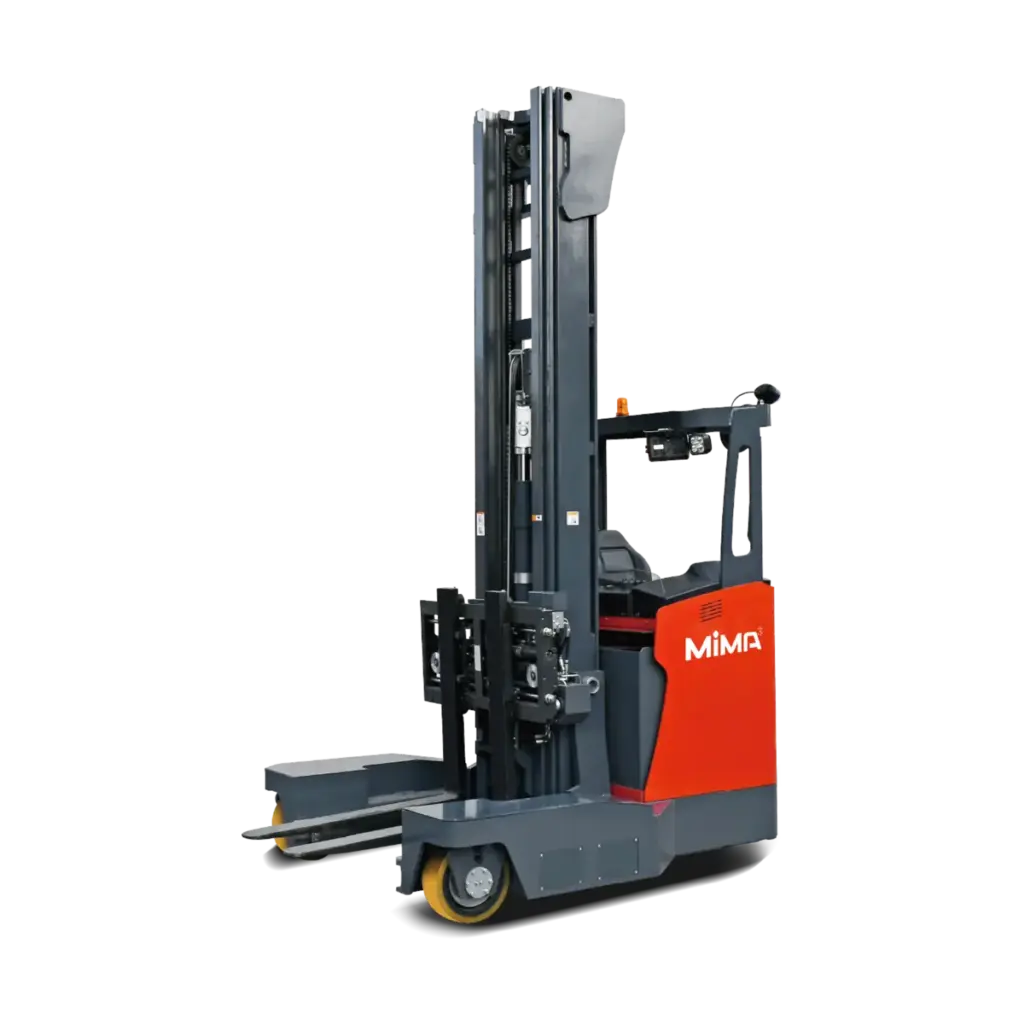
MQB Series — Space-Efficient Handling in Narrow Aisles
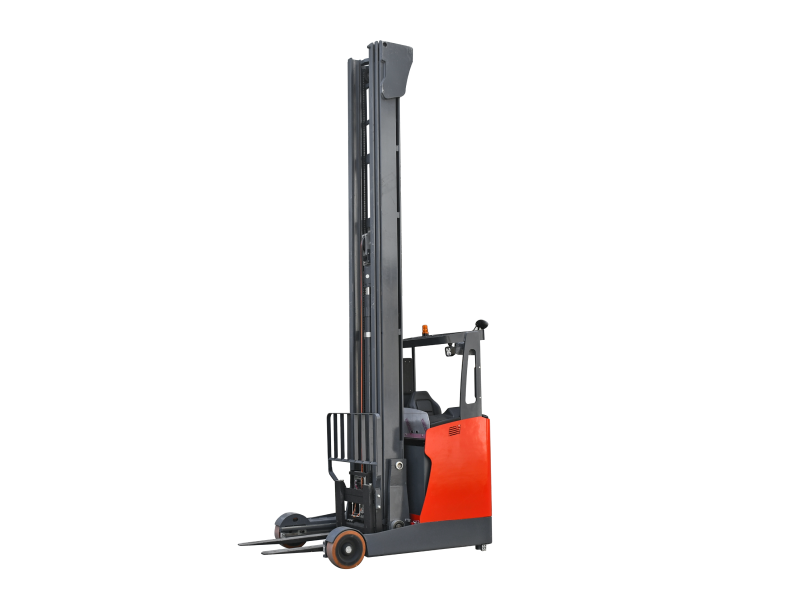
MQB30 is designed for storing and retrieving long materials in narrow indoor aisles. Its compact body supports precise travel and positioning close to racks, helping warehouses make better use of limited storage space.
It is well suited to applications that require a balance of narrow-aisle performance, load capacity and efficient long-material handling.
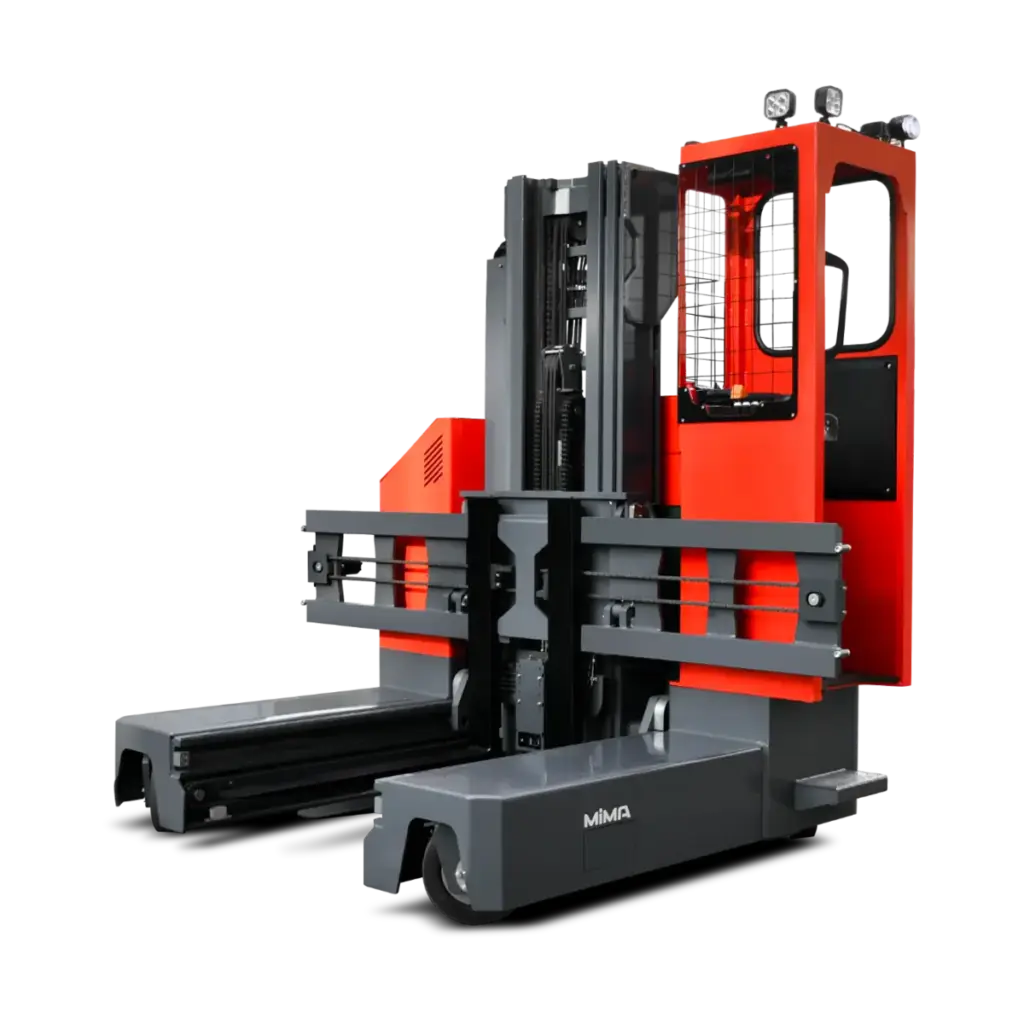
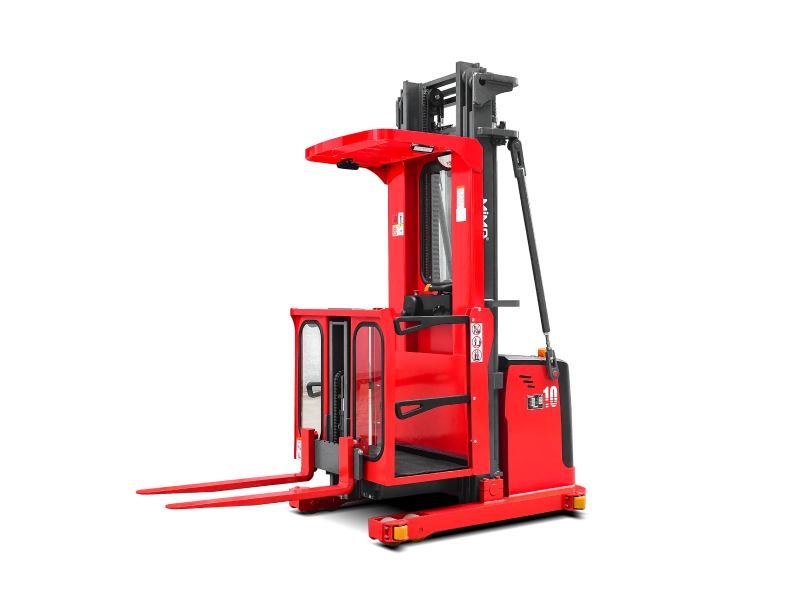
MQ Series — Compact and Cost-Effective for Lighter Loads
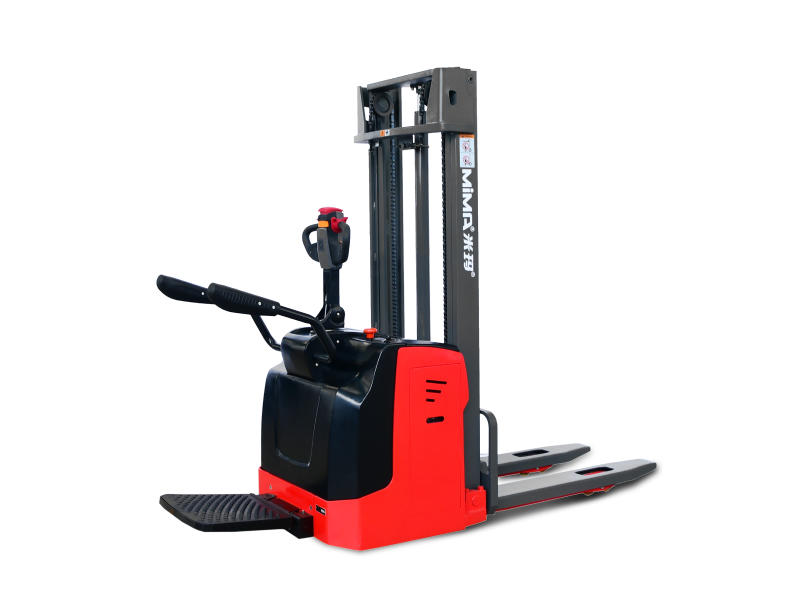
MQ Series models feature a narrow-body, stand-on design for lighter long-load handling in confined indoor spaces. Their compact dimensions and agile manoeuvrability make them practical for warehouses with limited space and moderate operating demands.
With a lightweight and economical configuration, the MQ models are particularly suitable for lower-capacity applications, moderate duty cycles and operations seeking a cost-effective multi-directional solution.
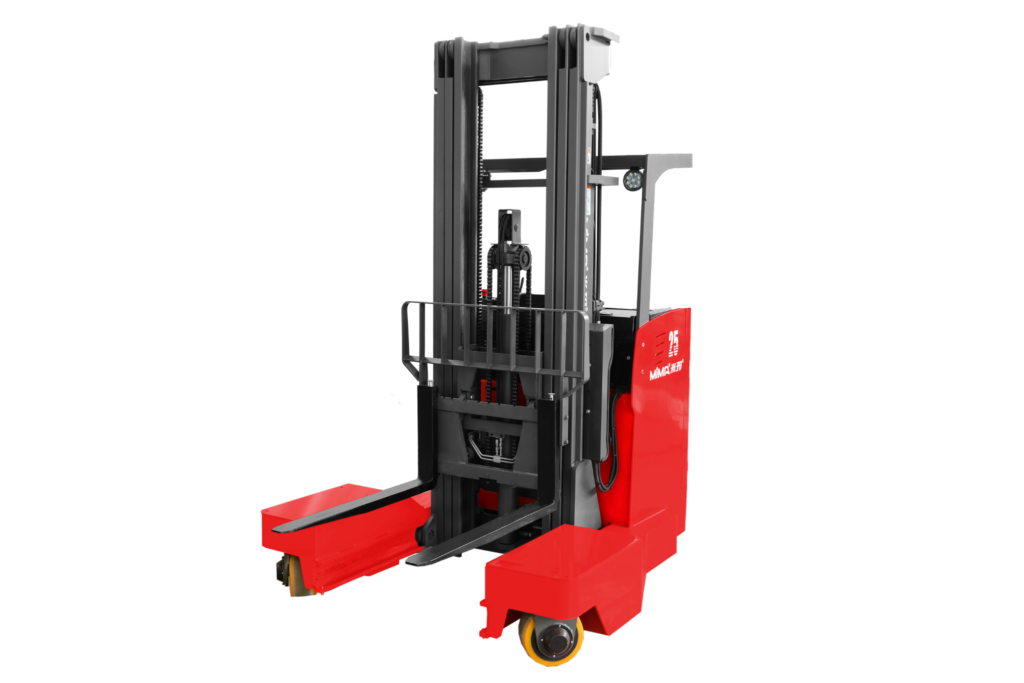
How the Series Differ
MQC: flexible configuration for heavy and complex loads
MQK: flexible load access across indoor and outdoor areas
MQZ: seated operation for frequent warehouse handling
MQB: compact dimensions for restricted spaces
MQ: compact, lightweight and cost-effective handling for lighter loads
From Application Data to the Right Solution
Before selecting a model, it is important to define the key application requirements:
- Load dimensions and maximum weight
- Required lifting height
- Aisle width and rack layout
- Indoor, outdoor or mixed operating conditions
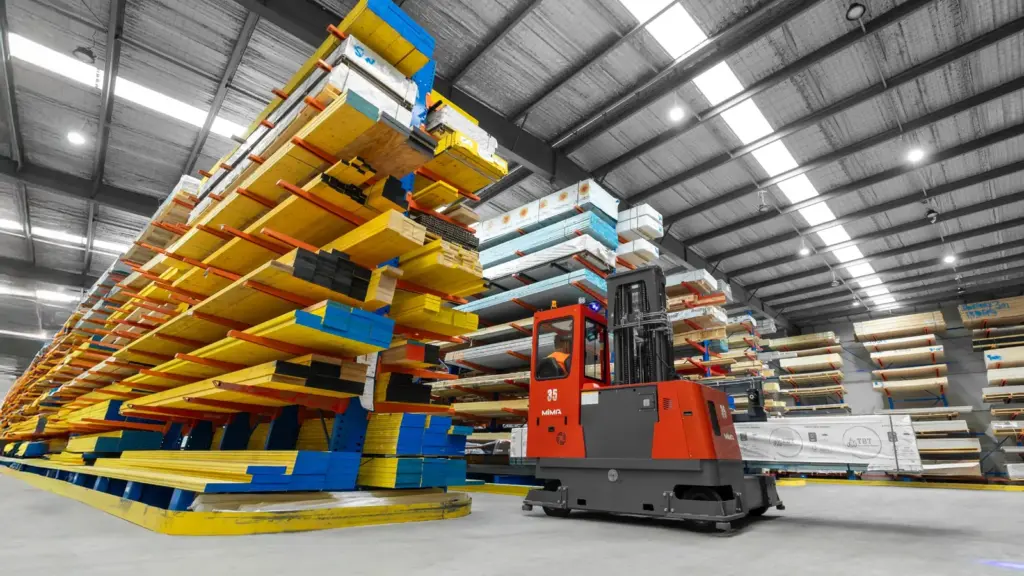
Additional details such as floor conditions, travel distance, working hours, fork dimensions and attachment requirements can be reviewed during the technical evaluation. Warehouse drawings, load photos and videos can also help improve the accuracy of the recommendation.
Explore MiMA long material handling solutions and share your application requirements with our team for a tailored recommendation.
 EN
EN  DE
DE  FR
FR  ES
ES  IT
IT  PT
PT  JA
JA  KR
KR  AR
AR  RU
RU