


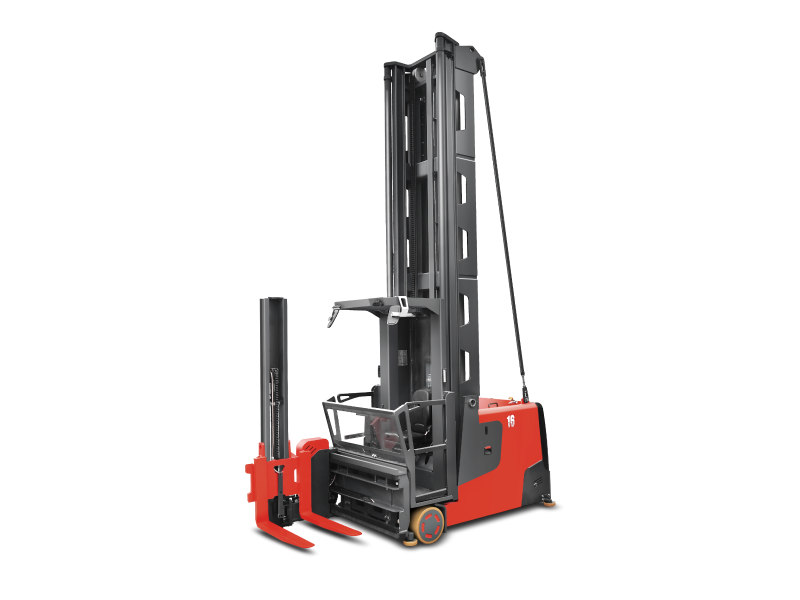
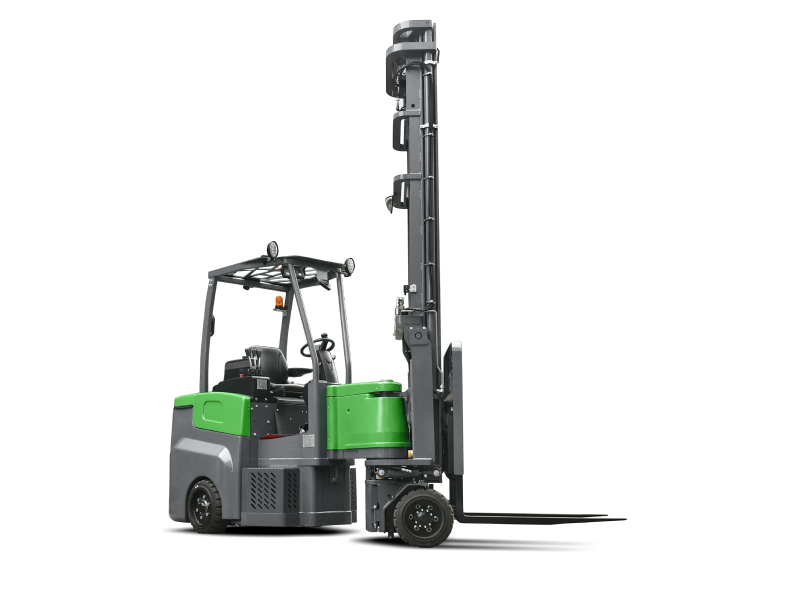
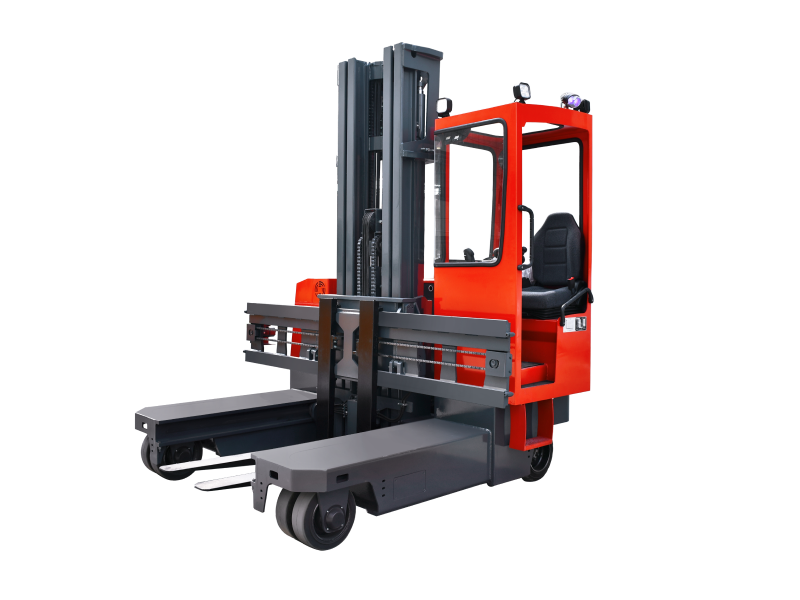
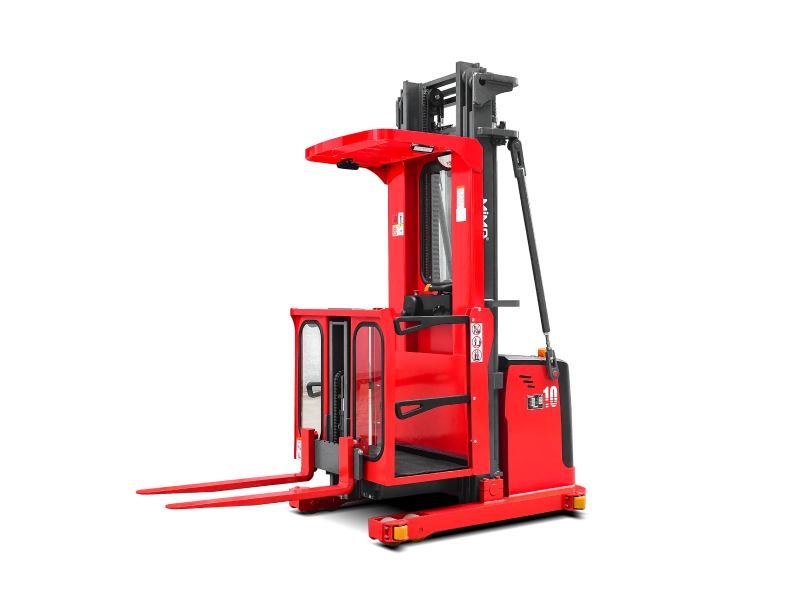
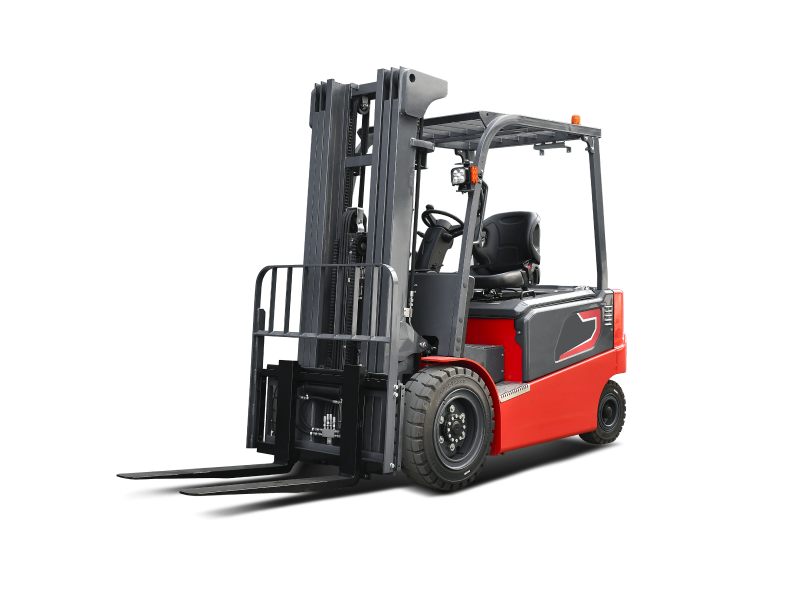
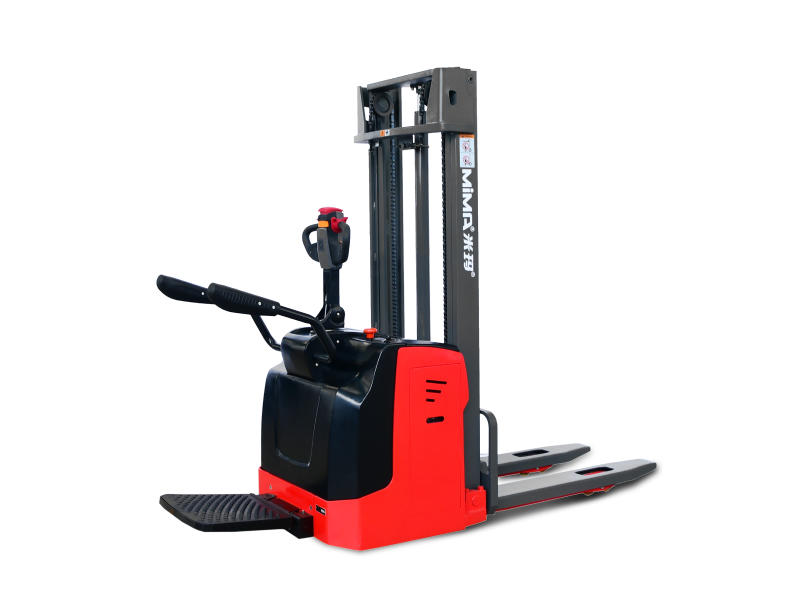
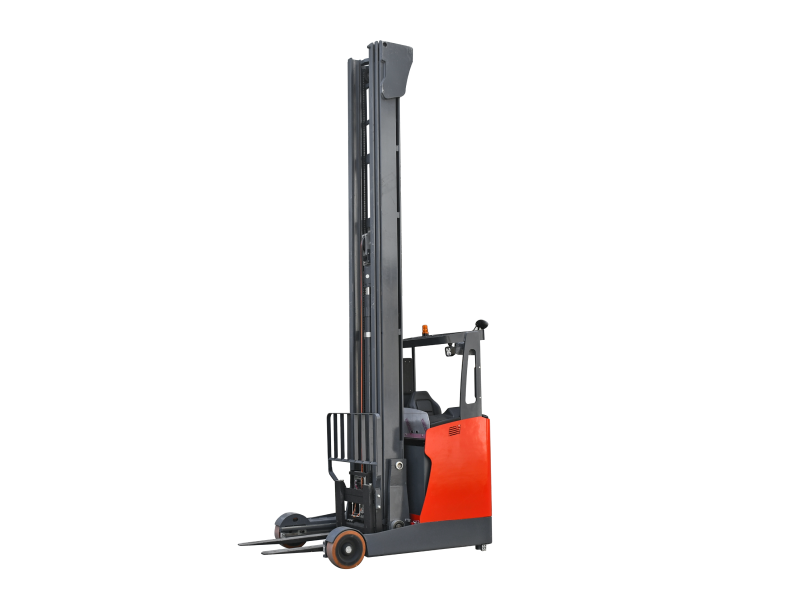
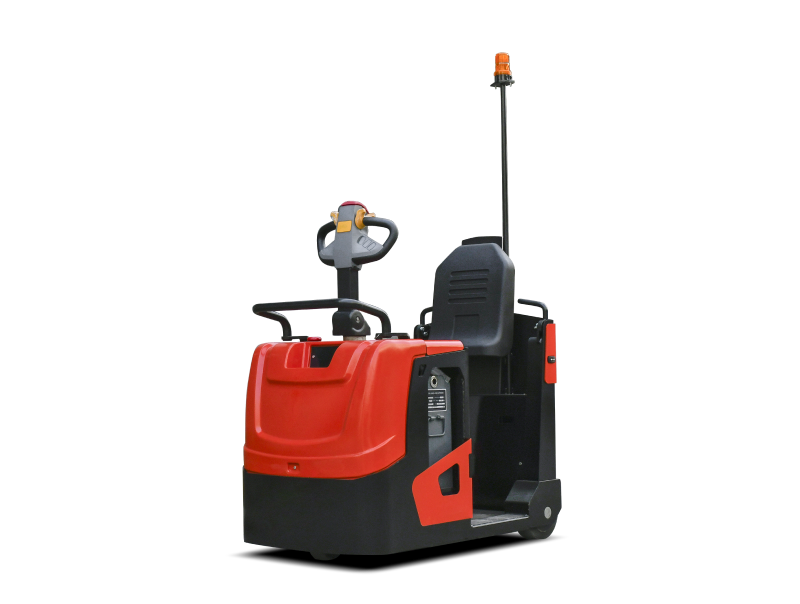
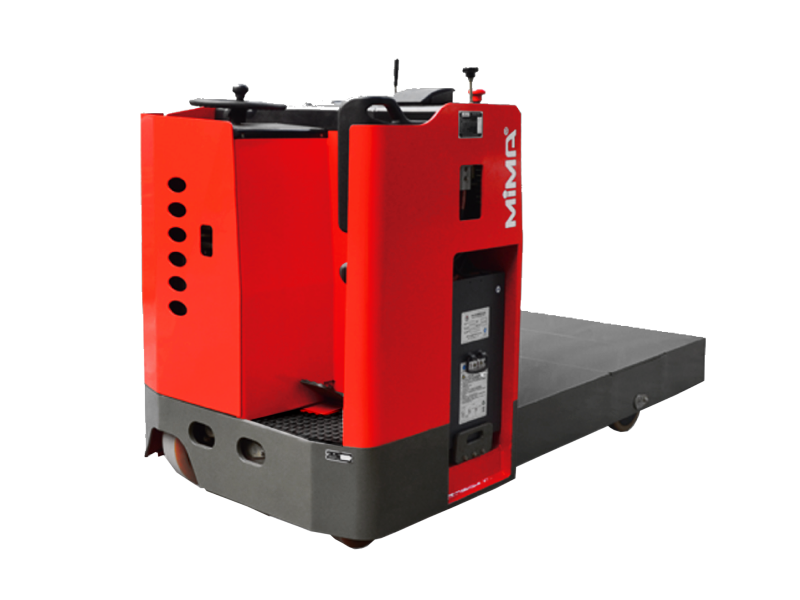
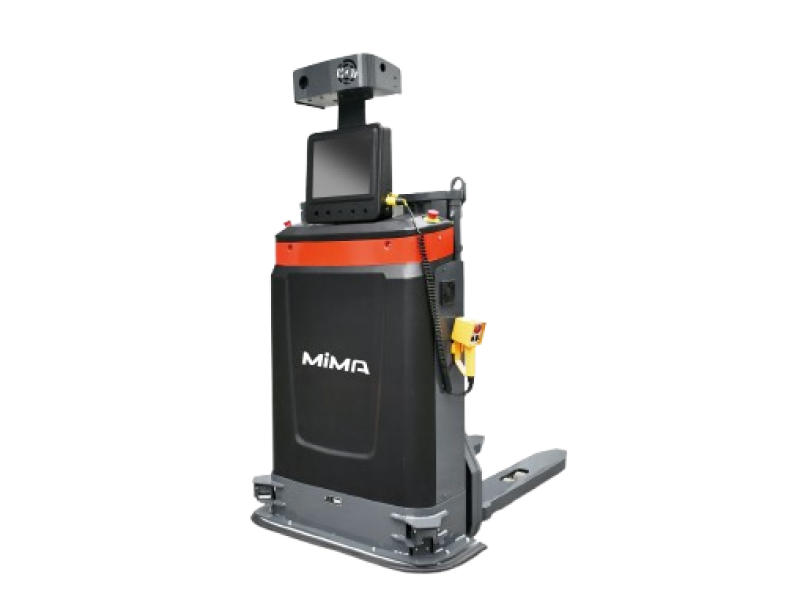



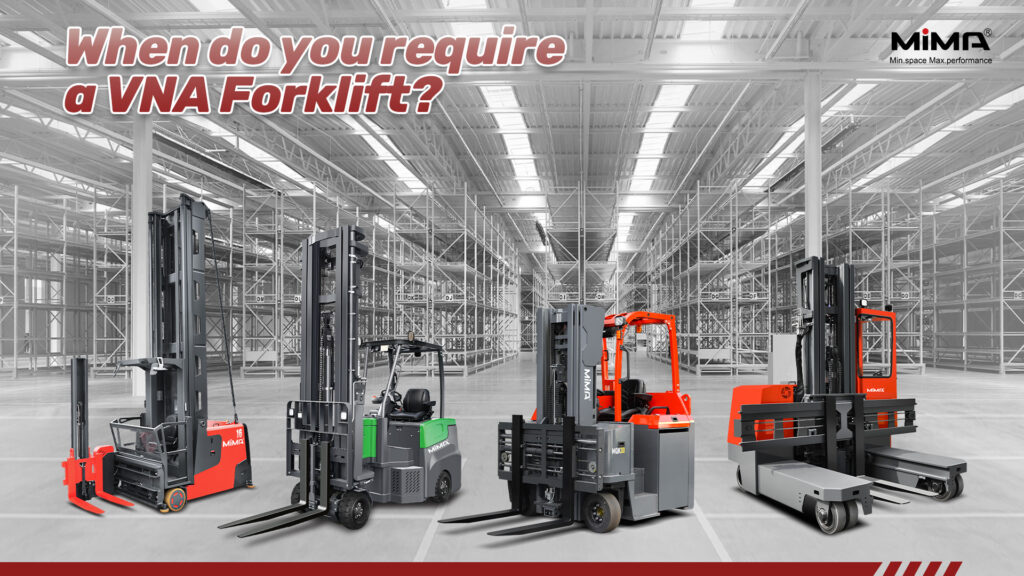
VNA forklifts are essential when your warehouse aisles are 6 feet wide or less, you need to maximize vertical storage space, or you’re handling high-volume operations in tight spaces. These specialized machines can operate in aisles as narrow as 5.5 feet while reaching heights up to 40 feet.
VNA forklift operating in narrow warehouse aisle
Let me share something from my experience. When I first started working with mold storage facilities, I noticed how traditional forklifts wasted so much floor space. The wide aisles needed for regular forklifts meant we could only fit half the storage racks we actually needed.
What makes VNA forklifts different from regular ones?
Your regular forklift might work fine in open spaces. But when space gets tight, everything changes. You need something built for precision.
VNA (Very Narrow Aisle) forklifts are designed with specialized guidance systems, narrower chassis, and advanced stability controls. Unlike standard forklifts that need 10-12 feet of aisle width, VNA forklifts operate safely in aisles between 5.5 to 8 feet wide.
Comparison between VNA and standard forklift dimensions
The key differences go beyond just size. VNA forklifts use wire guidance or rail systems to maintain perfect alignment in narrow spaces. Their masts are designed differently too. Instead of tilting forward and backward like regular forklifts, many VNA models keep the mast vertical for better stability.
I remember visiting a client’s warehouse where they tried using standard forklifts in narrow aisles. The result was damaged inventory, scratched racking systems, and frustrated operators. The stress on everyone was visible. After switching to VNA equipment, their productivity increased by 40% and accidents dropped to nearly zero.
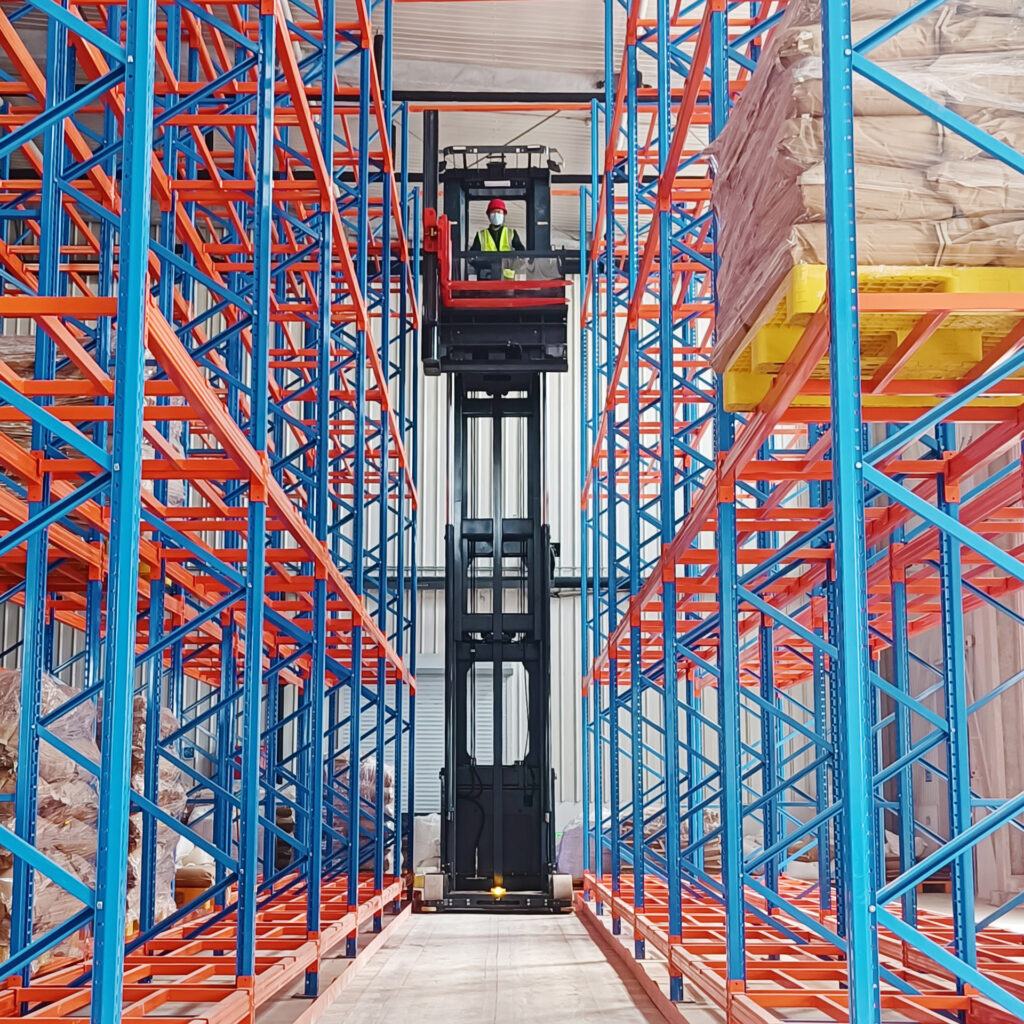
The reach capability is another major difference. While standard forklifts typically reach 15-20 feet, VNA forklifts can safely reach 35-40 feet or more. This vertical advantage transforms how you think about storage density.
| Feature | Standard Forklift | VNA Forklift |
|---|---|---|
| Aisle Width Required | 10-12 feet | 5.5-8 feet |
| Maximum Reach Height | 15-20 feet | 35-40+ feet |
| Guidance System | Manual steering | Wire/rail guided |
| Storage Density Impact | Standard | 40-60% increase |
How do you calculate the ROI of VNA systems?
Money talks in business decisions. You need to know if VNA forklifts will pay for themselves. The math might surprise you.
Calculate VNA ROI by comparing increased storage capacity against equipment costs. Most warehouses see 40-60% storage density improvements, often paying back VNA investments within 2-3 years through reduced real estate needs and improved efficiency.
ROI calculation chart for VNA forklift systems
Start with your current storage capacity. Count how many pallet positions you have now. Then calculate how many you could have with narrow aisles. The difference is usually shocking.
Here’s a real example from my consulting work. A 50,000 square foot warehouse stored 2,000 pallets with standard equipment. After converting to VNA systems, they stored 3,200 pallets in the same space. That’s a 60% increase without expanding the building.
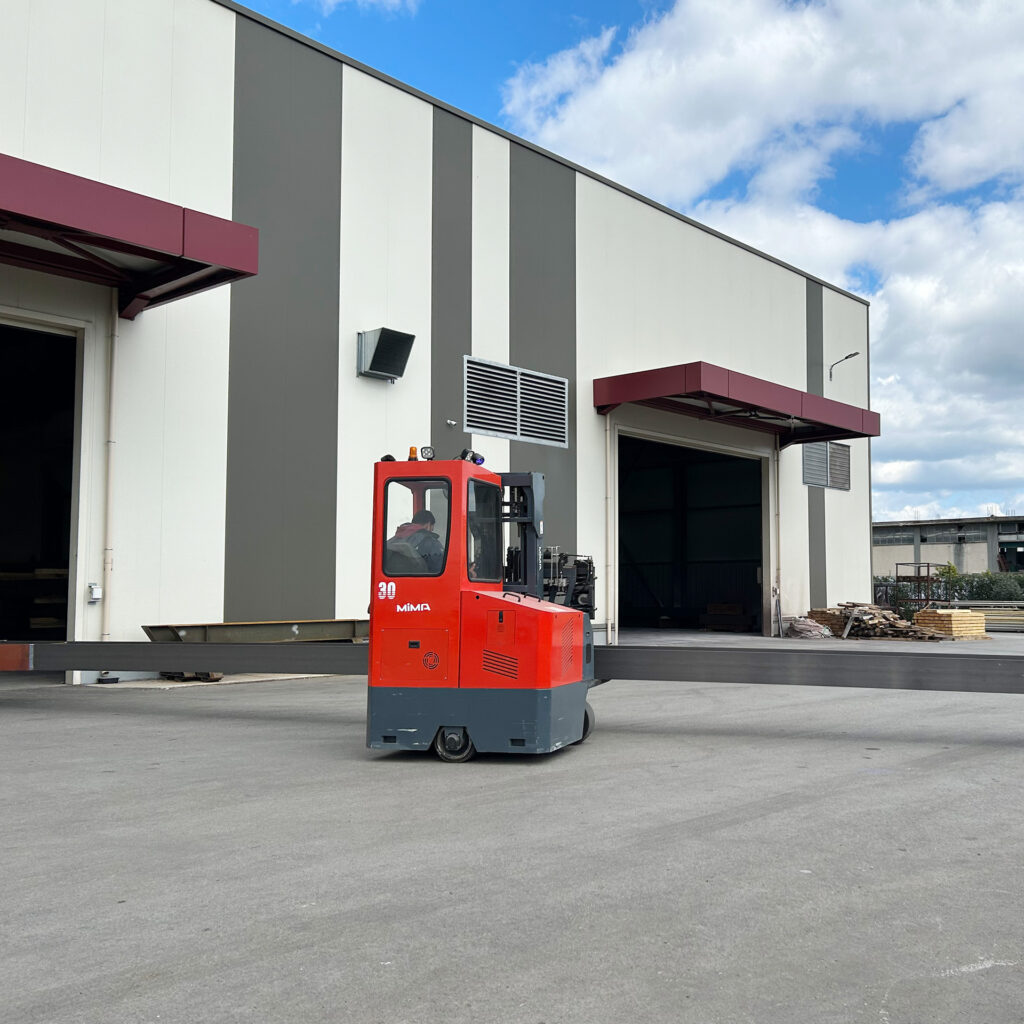
The cost savings go beyond just storage. Reduced travel time between picks improves productivity. Operators complete more tasks per hour. Labor costs per unit handled drop significantly. Energy costs often decrease too since VNA forklifts typically use advanced battery technology.
Don’t forget the real estate angle. Instead of building a new warehouse, you can often double your capacity in your existing space. Commercial real estate costs $50-150 per square foot in most areas. Avoiding expansion saves massive capital costs.
The payback calculation looks like this: (Additional storage capacity × inventory holding cost reduction + Labor productivity gains + Avoided expansion costs) ÷ VNA system investment = ROI timeline. Most operations see positive returns within 24-36 months.
What are the space requirements for VNA operations?
Space planning makes or breaks VNA success. You can’t just install narrow aisles and hope everything works. Proper planning prevents expensive mistakes.
VNA systems require minimum ceiling heights of 20 feet, aisle widths between 5.5-8 feet, and specialized racking systems. You also need adequate maneuvering areas at aisle ends for equipment turning and staging operations.
VNA warehouse layout requirements diagram
Ceiling height is your first consideration. VNA forklifts reach high, but they need clearance above maximum load height. Add 3-4 feet minimum above your highest storage level for safe operation. Sprinkler systems, lighting, and HVAC equipment all affect usable height.
Aisle width depends on your specific equipment and load sizes. Pallet dimensions matter. Standard 40×48 inch pallets work well in 6-foot aisles. Larger loads need wider spaces. Your VNA supplier will calculate exact requirements based on your inventory profile.
The racking system integration is crucial. Standard pallet racking won’t work. You need VNA-rated racking designed for the increased storage density and equipment loads. The racking often includes guide rails or wire guidance systems built into the structure.
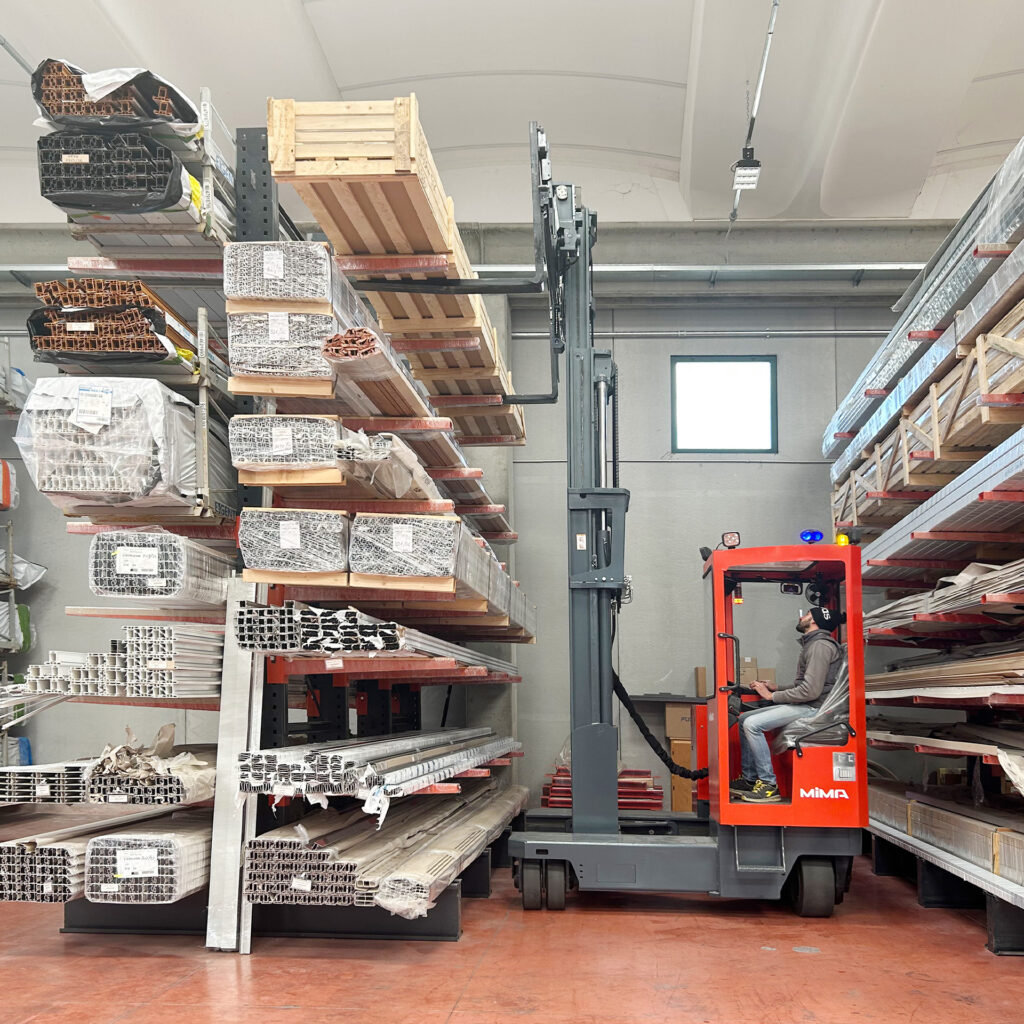
End-of-aisle areas need special attention. Equipment must turn around and stage loads. Plan for at least 12-15 feet of clear space at each aisle end. This area handles cross-traffic and allows for load staging without blocking aisles.
Consider your inventory mix too. Fast-moving items should stay in easily accessible locations. Reserve narrow aisles for slower-moving inventory that doesn’t require frequent access. This strategy maximizes the efficiency benefits of your VNA investment.
Conclusion
VNA forklifts solve space problems that regular equipment simply can’t handle. When your warehouse needs maximum storage density in minimal space, VNA systems deliver measurable results that improve your bottom line.
 EN
EN  DE
DE  FR
FR  ES
ES  IT
IT  PT
PT  JA
JA  KR
KR  AR
AR  RU
RU